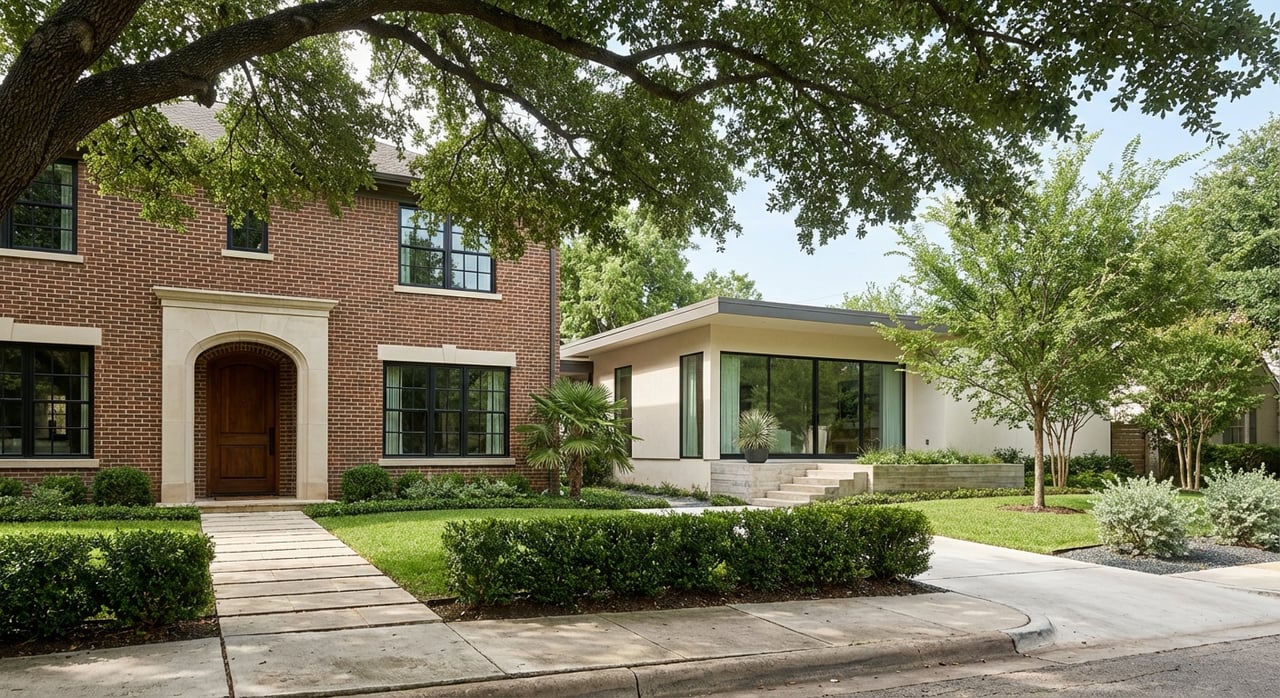
Trying to choose between East Plano and West Plano? You’re not alone. Plano offers great neighborhoods on both sides, but the tradeoffs around price, commute, amenities, and home style can feel confusing. In this guide, you’ll get a clear, side‑by‑side view so you can decide which area fits your lifestyle and budget. Let’s dive in.
What “East” and “West” really mean
Plano doesn’t have official East and West boundaries. Locals and brokers use major roads and a few zip codes as shorthand. In this guide, West Plano refers to neighborhoods generally west of US‑75 and within the 75024–75093 area, including Legacy West and the Willow Bend vicinity. East Plano refers to neighborhoods east of US‑75, including established subdivisions and the Oak Point area. Some market reports also use a separate “Central” category, which sits between these two. You can see a common area breakdown in a recent local outlook that uses these definitions as working zones for market analysis (Haistings Real Estate outlook).
Home prices and value
Citywide, Plano’s median owner‑occupied housing value sits in the mid‑$400Ks, which gives you a helpful benchmark for the market overall (U.S. Census QuickFacts). Within Plano, recent local brokerage summaries show a clear split between East and West. Indicative medians often look like East ≈ $413K and West ≈ $730K, with higher average price‑per‑square‑foot in West Plano as well (example ppsf: West ≈ $242 vs East ≈ $203). Treat these as directional ranges rather than daily quotes, since micro‑markets shift month to month (Haistings market report).
Why the gap? West Plano clusters newer, master‑planned developments, mixed‑use retail, and luxury subdivisions near major corporate campuses, which typically supports higher pricing. East Plano’s established neighborhoods often trade at lower medians and lower price‑per‑square‑foot, which can stretch your budget and offer more space or yard for the money. Many East Plano communities date from the 1970s–1990s and appeal to buyers who like mature trees, renovation potential, and value per square foot (Neighborhoods.com overview of East Plano).
Always remember that area medians can hide big differences. West Plano has both entry‑level resale pockets and ultra‑luxury enclaves. East Plano also has renovated homes and newer infill. For a decision, pull recent comparable sales for the exact subdivision.
How to shop by budget
- Under $500K: You’ll often see more options in East Plano’s established neighborhoods, including larger lots or homes ready for cosmetic updates.
- $600K–$1M: Expect choices on both sides, including renovated East Plano homes and West Plano homes near major amenities, depending on size and finish.
- $1M+: West Plano typically offers the largest selection of newer, luxury product in gated or custom communities. High‑end East Plano options exist but are more limited.
Commute and transportation
The average commute time for Plano workers is 25.4 minutes based on the latest citywide estimate. That provides a helpful baseline when you weigh a slightly longer drive against a more affordable home or a bigger lot (U.S. Census QuickFacts).
- US‑75 (Central Expressway): This north‑south artery connects Plano to Richardson and Dallas. If your job is along this corridor, East Plano’s proximity can be an advantage.
- DART Red Line: There are two Plano stations, Downtown Plano and Parker Road, which matter if you want a transit option for work or events (Plano overview on Wikipedia).
- Dallas North Tollway: West Plano neighborhoods near the Tollway are positioned for quicker access toward Dallas and the Legacy West employment hub.
- PGBT and SH‑121: President George Bush Turnpike and State Highway 121 provide regional east‑west and airport access, useful from both sides of Plano (regional routes overview).
Tip: Check drive times during the actual hours you travel. Interchanges around the Tollway and US‑75 can back up at peak times and during school drop‑off and pick‑up.
Schools and attendance zones
Most of Plano is served by Plano ISD. District and campus accountability ratings change over time, and performance can vary by campus. Many families look at third‑party resources for snapshots, then verify the specific attendance zone for a given address.
- For example, Plano West Senior High is commonly cited for strong performance on third‑party sites. You can review a Texas Tribune campus snapshot for context (Texas Tribune profile) and compare with an external rating page (GreatSchools listing).
- East Plano also feeds into Plano ISD campuses. Program offerings and performance vary by attendance boundary, just like in West Plano.
Your best next step is simple:
- Confirm the home’s exact attendance zone using the district’s boundary and feeder maps.
- Review campus accountability summaries on public sources for the most current year.
- If schools are a top factor, ask your agent to pull recent resale data by zone to understand how assignment may affect demand over time.
Parks, dining, and corporate anchors
- Legacy West and The Shops at Legacy: West Plano’s mixed‑use core draws people for walkable dining, retail, hotels, and corporate campuses. Recent corporate news, such as Sally Beauty’s move to Legacy West, underscores the job base and amenity concentration on the west side (Bisnow coverage).
- Oak Point Park: On the east side, Oak Point Park offers about 800 acres of trails and open space that serve as a major outdoor anchor for nearby neighborhoods (Plano overview on Wikipedia).
- Arbor Hills Nature Preserve: Near west and northwest Plano, Arbor Hills spans roughly 200 acres with trails and scenic overlooks. Many West Plano buyers highlight its proximity for daily recreation (same source as above).
Both sides offer strong quality of life. West Plano has more pockets of new‑urbanist walkability near Legacy West. East and Central Plano lean more suburban and auto‑oriented, with the historic Downtown Plano Arts District adding a charming, walkable option on the east side.
Home styles and ages
- West Plano: You’ll see a mix of late‑1990s to brand‑new construction, master‑planned subdivisions, custom estates, and modern townhomes. Many communities have newer systems and amenities, with a higher average finish level that pairs with the area’s price premium (Haistings neighborhood sample).
- East Plano: Many neighborhoods were built in the 1970s–1990s. Homes often sit on larger, mature lots and can offer renovation potential or an opportunity to maximize square footage at a lower price per foot (Neighborhoods.com on East Plano).
Quick decision guide
Use this simple checklist to narrow your search:
- Prioritize newer builds, proximity to Legacy West, and quick Tollway access: Start with West Plano and plan for a material price premium (Haistings market report).
- Prioritize budget efficiency, larger lots, and established neighborhoods: Focus on East Plano for more house per dollar while staying within Plano ISD (Neighborhoods.com overview).
- School‑focused: Confirm the specific address, feeder pattern, and programs that matter to you. Campus‑level performance can vary within the same district (Texas Tribune profile).
- Commute‑driven: Test AM and PM drive times. West Plano often trades higher price for Tollway and Legacy access, while East Plano can offer quicker routes to US‑75 and DART options (U.S. Census QuickFacts).
Plan your move with a clear strategy
Both sides of Plano can be a smart choice. The best fit comes down to your budget, commute, desired home age, and daily lifestyle. If you want help pressure‑testing the options, we can pull live MLS comps by subdivision, map commute scenarios, and line up tours that compare like‑for‑like homes on each side.
Ready to move forward? We can also leverage Compass tools if you need to prep and time a sale. Compass Concierge can help fund strategic updates that improve your listing’s marketability, and Bridge Loans can ease the buy‑before‑you‑sell puzzle when timing matters.
Connect with the Katie Chu Group to set a plan that fits your timeline, budget, and goals.
FAQs
What are typical prices in East vs West Plano?
- Local summaries often show East around the low‑$400Ks and West around the low‑to‑mid‑$700Ks, with higher average price‑per‑square‑foot in West Plano (Haistings market report).
How do Plano school options compare by area?
- Most addresses feed Plano ISD, but campus assignments and programs vary; review public campus snapshots and verify your address with district maps before deciding (Texas Tribune profile and GreatSchools listing).
What commutes should I expect from each side?
- Plano’s mean commute is about 25 minutes; West Plano has fast access to the Tollway and Legacy West, while East Plano is closer to US‑75 and DART Red Line stations (U.S. Census QuickFacts and Plano overview).
Which side has more walkable dining and retail?
- West Plano’s Legacy West and The Shops at Legacy offer the largest mixed‑use, walkable districts, supported by nearby corporate campuses (Bisnow coverage).
Where are the biggest parks in Plano?
- East Plano is close to the roughly 800‑acre Oak Point Park, while West and northwest Plano enjoy the about 200‑acre Arbor Hills Nature Preserve (Plano overview on Wikipedia).